
YRE International Competition 2026-2027
Young Reporters for the Environment (YRE) holds an annual YRE International Competition for young people aged 11-25 involved in the programme.
The purpose of the competition is for young people to investigate environmental issues, propose solutions, report it through various communication and journalistic ways to a local network and raise awareness by sharing it with an international community.
This year’s theme is Small Worlds, Big Futures: Reporting from a Pollinator-Powered 2030.
Participants are invited to explore the fascinating world of pollinators and imagine what a thriving, pollinator-powered future could look like by 2030. Through their reporting, young people can investigate the connections between pollinators, biodiversity, food systems, communities, and our shared future.
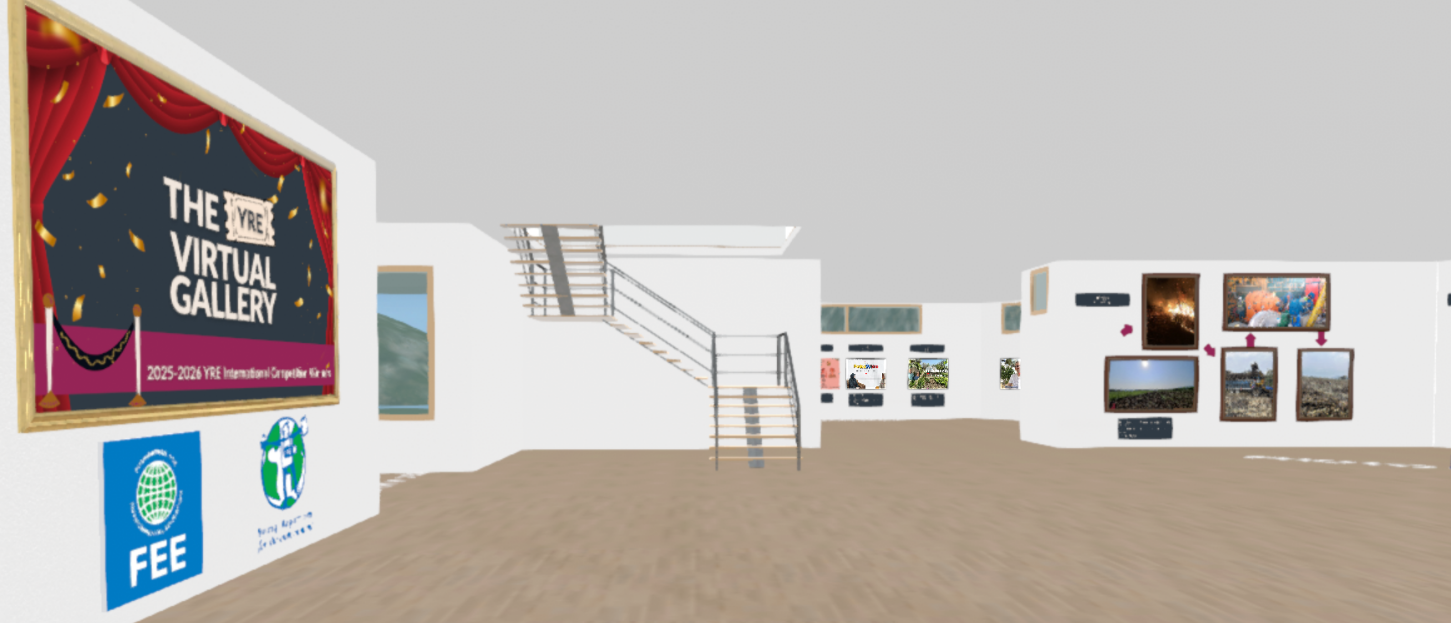
Winning entries from the YRE International Competition 2026–2027 will be showcased in the YRE Virtual Gallery, celebrating young environmental communicators and sharing their stories with an international audience.
Explore more information below about the competition categories, assessment criteria, and supporting resources to help you get started.
2026-2027 Theme
This year the theme is Small Worlds, Big Futures: Reporting from a Pollinator-Powered 2030.
But remember: you can also choose other themes and explore different topics that are more relevant or interesting to you. For other ideas, explore the resources section.
Key Deadlines
Opening: September-October
Deadline at national level: for YRE national offices to determine within each country. If you’re a young reporter, check with your national office here
Deadline for International submissions: 5 May
International Shortlisting period: 10 - 20 May
International Jury review period: 20 May – 3 June
Jury meeting: 7-8 June
International Award Ceremony & Gallery Opening: June (Date TBA)
YRE Virtual Gallery
Winning entries from the YRE International Competition 2026–2027 will be showcased in the YRE Virtual Gallery, celebrating young environmental communicators and sharing their stories with an international audience.
2026-2027 Competition resources
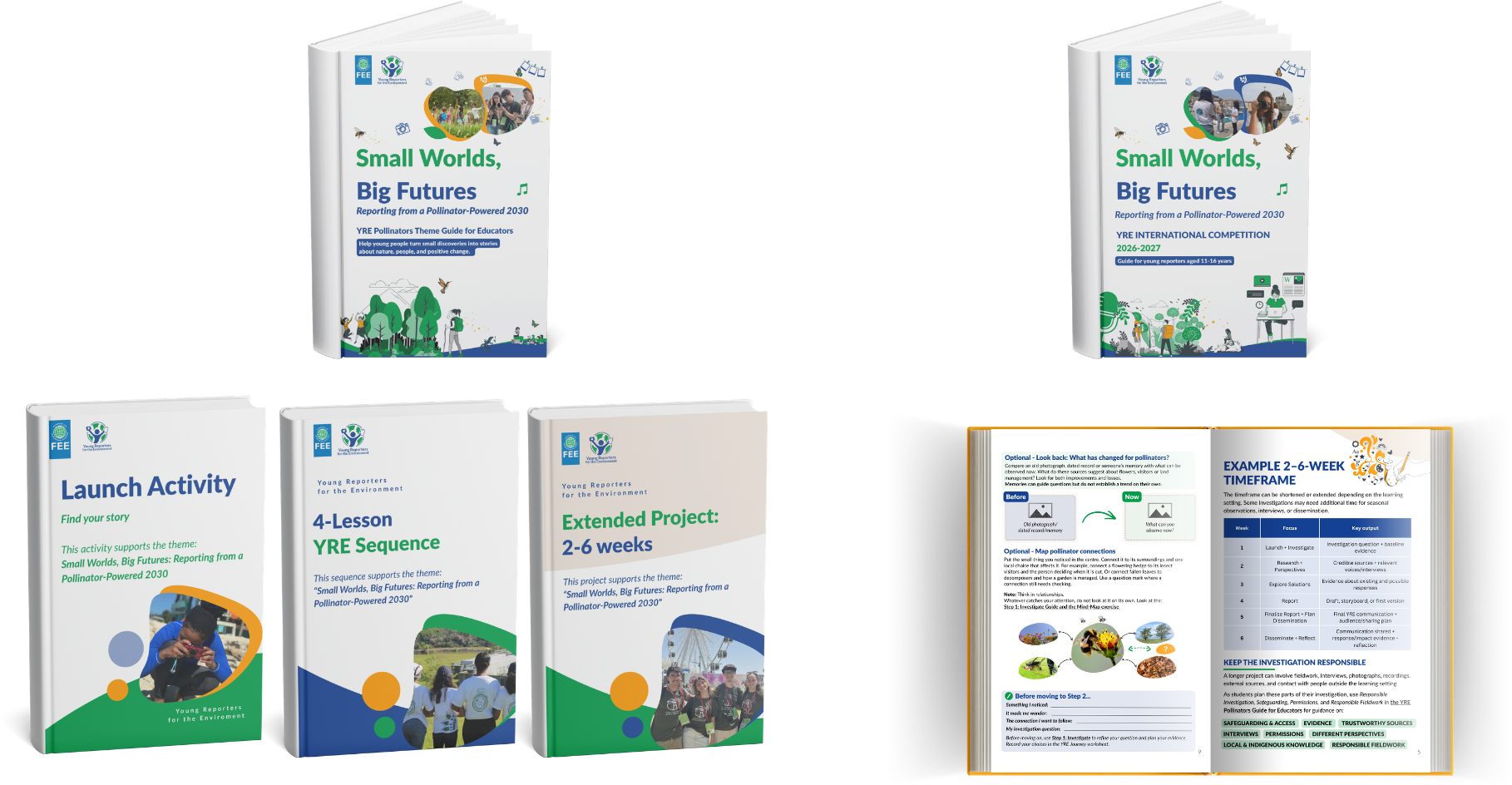
We build resources annually to help young reporters build stories.
Explore other resources: here
Stay tuned for more resources associated to the YRE International Competition.
2026-2027 Competition Categories
-
![]()
Article Category
National Operator submission limit: Maximum three entries, one per age group (11–14, 15–18, and 19–25 years).
Submit: An article in English, maximum 1,000 words, with a title of no more than 140 characters, and a student reflection on the process of creating the entry.
Read the Article Criteria and Assessment for the full requirements
-
![]()
Photo Category
National Operator submission limit: One entry per photo category, regardless of age group.
Submit:
Staged Campaign Photo: One staged/edited photo + title + description + student reflection.
One-Take Photo: One original photo + title + short description + student reflection.
Photo Story: Three to five original photos + title + description + caption for each photo + student reflection.
Read the Photo Criteria and Assessment for the full requirements.
-
![]()
Video Category
National Operator submission limit: One entry per video category, per age group (11–14, 15–18, and 19–25 years). Maximum six entries in total.
Submit:
Long Form Video Reportage: Maximum three minutes + landscape format + title + student reflection.
Short Form Video Campaign: Maximum one minute + portrait format + title + student reflection.
Read the Video Criteria and Assessment for the full requirements.
-
![]()
Podcast Category
National Operator submission limit: Maximum three entries, one per age group (11–14, 15–18, and 19–25 years).
Submit: An audio file in English, or a static video with synchronised English subtitles, maximum five minutes + title + student reflection.
Read the Podcast Criteria and Assessment for the full requirements.
-
![]()
Twinning Category
National Operator submission limit: No limit on the number of International Collaboration entries submitted.
Submit: An article or video created through collaboration between young people from two different contexts + student reflection.
See an example of a collaboration between Türkiye and Slovenia.
Read the Twinning Criteria and Assessment for the full requirements.
-
![]()
Open Format Category
National Operator submission limit: No limit on the number of entries submitted.
Submit: A creative entry in the communication format that best fits the message, intended audience, and way of expressing yourself + student reflection.
Possible formats include illustrations or paintings, creative writing, letters, comics, games, installations, digital or interactive storytelling, mixed media, AI-supported creative works, and other innovative communication formats.
Read the Open Format Criteria and Assessment for the full requirements.






2026-2027 ASSESSMENT CRITERIA
If you’re interested in learning more about how submissions are assessed, click the button below to find out more about the media category assessment criteria.
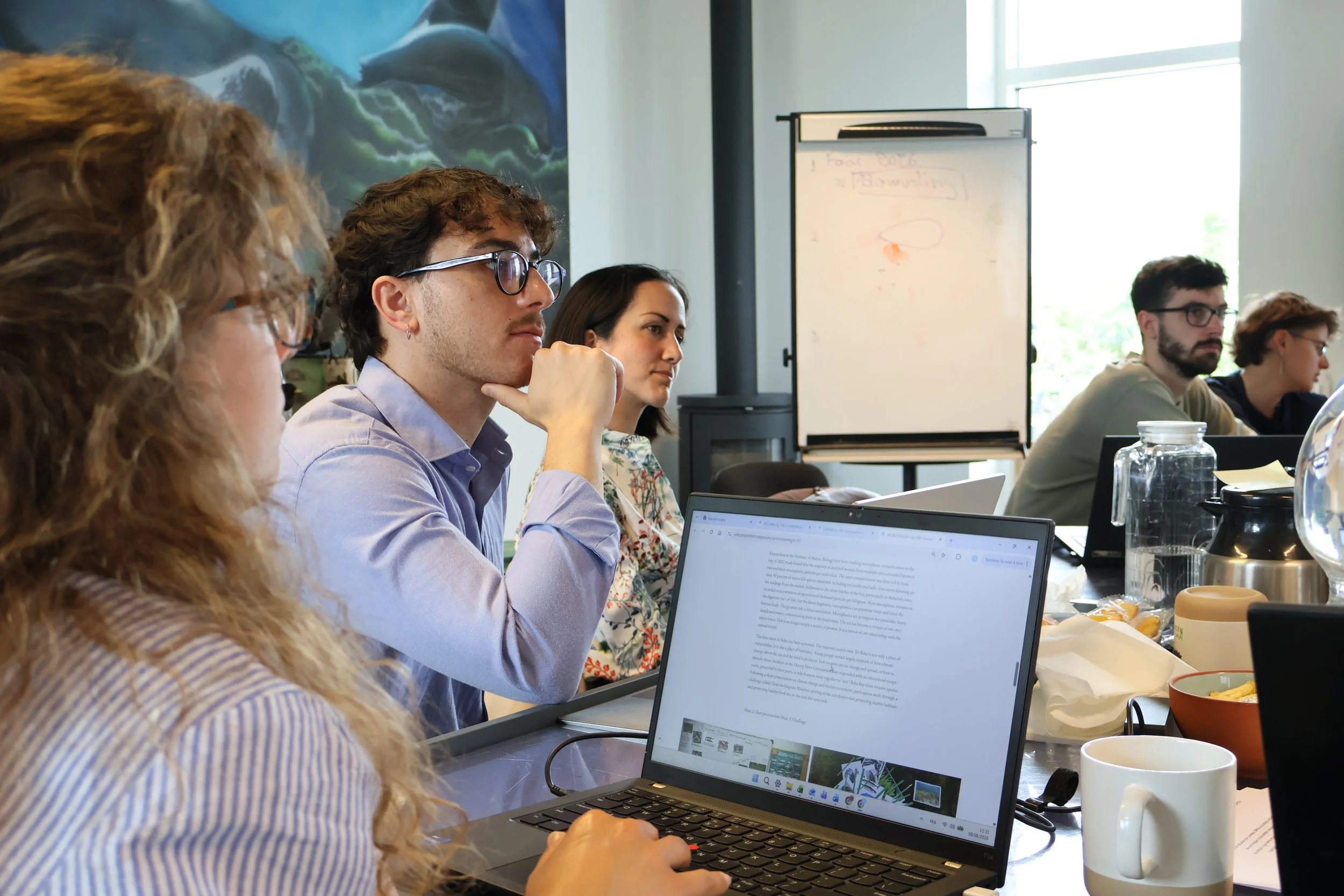
YRE International Jury
Stay tuned until we announce this year´s International and Youth Ambassador Jury
Additional Competition Information
-
ALL THE SUBMISSIONS:
Include the following information: 1) Name of author(s), 2) Age of author(s) on day of submission to the National Competition, 3) Name of registered school or group, 4) Country of residence, 5) Title of entry, 6) Student reflection on the process of creating the entry 7) Link(s) to dissemination
Fulfil the Format & Structure criteria for its category.
Must be disseminated by the students and proof of that needs to be submitted as well
Be in written and/or spoken English or must have English subtitles.
Focus on real and current local issues with links to the global context.
The students voice should be clear
Present possible and constructive solutions supported by credible sources e.g., local stakeholders, experts, academic research, etc.
Include a credit role, footnotes, or a bibliography with the sources of images, video footage, music and information not created by students.
Include a reflection on the idea, process, intention and learning of the investigation, the communication, the creation of the entry and the whole learning process.
-
All entries need to show proof of student dissemination:
Dissemination must be carried out by the student(s) themselves and should reflect the intended message, audience and purpose of their work.
Evidence of this dissemination must be provided with the international submission.
National Operators, schools and educators are strongly encouraged to further amplify students' work, for example, through websites, newsletters or social media. However, this should complement rather than replace student-led dissemination.
Promotion carried out solely by the National Operator, school or educator will therefore not count as evidence that the student has completed Step 4 of the YRE methodology.
Example: Türkiye's article The Forest of the Sea: was republished across major national newspapers, a national news agency, regional media, online news platforms and YouTube, significantly extending the reach of the students' investigation beyond the school community. By bringing their research on seagrass, food heritage and climate resilience to wider public audiences, the students demonstrated how environmental journalism can contribute to broader public dialogue on sustainability.
-
Together with every submission, students will answer: “In your own words, describe why you choose the topic and highlight the process you followed to develop the communication entry.” To help them share their thoughts, they can try to answer the following questions. These questions are meant to encourage students to reflect on the complete process, reinforcing that the competition values the educational journey as much as the final submission.
Helping questions:
• Why did you choose this topic?
• Why is this issue important to you and your community?
• What process you adopted to develop your journalistic piece?
• What did you hope people would understand after seeing, reading or listening to your work? What impact did you want to create?
• Why did you choose this communication format?
• Who did you want to reach?
• How did you communicate your work? (e.g. exhibition, workshop, local newspaper, municipality, social media, community event, school presentation...)
• What happened after sharing your work? Did you receive feedback, start conversations or inspire action?
• What was the biggest thing you learned during this project?
-
Students will also have the possibility to upload supporting materials that illustrate the development of their work. Their purpose is to provide additional context where useful and help make the students' learning process more visible.
-
AI should not be used to generate Text or visuals. Where AI has been used, students should explain:
how it was used;
why it was used;
which parts remain entirely their own work;
how AI supported, rather than replaced, their investigation or creative process.
If AI-generated content is detected without transparent reference, points will be deducted.
For format specific AI use restrictions, read the competition criteria.
Example of how to use AI: the Israeli entry Our Sea is Polluted. Rather than presenting an AI-generated image without explanation, the student explicitly documented how artificial intelligence had been used throughout the creative process. The entry explained why AI was selected, how prompts were designed to communicate the intended environmental message, which visual elements were deliberately requested, and how the final composition was refined. The transparency of this process clearly demonstrated that the environmental concept, creative decisions and overall narrative remained student-led, while AI functioned as a supporting tool rather than replacing the student's own contribution.
-
he YRE programme values academic honesty and the use of credible sources. Any facts, statistics, images, etc. that a student uses in their entry (article, photo, or video) should be listed in a ‘Reference’ list at the end of the entry and in-text footnotes are encouraged.
Remember: While sourcing information, remember these entries aren't academic pieces but journalistic and media-oriented content. Such information is distinguished by featuring insights from knowledgeable individuals in the field.
-
Legal matters are especially important in today’s media. It is your responsibility to be aware of the rules and regulations relating to media content (text, photos, and music) when you work on your submission. Any submissions that FEE finds to be of dubious legal standing will be ineligible to win the International Competition. If you have any doubts on this matter, please contact the National Operator in your country or YRE International head office.
Plagiarism, or using someone else’s ideas, words, images, videos, and/or music and representing it as your own original work, is a serious offense. Therefore, it is especially important that you properly cite any ideas, text or other media that are not your own. You can cite your sources using footnotes, credit rolls for videos, or a bibliography. There are several online sources where you can check your written work, such as articles, for plagiarism. As previously stated in the criteria, all photos, articles, and videos should be your own original work, and in the case of videos a minimum of 70 percent of the video should be your own video footage, images, etc. When reporting on issues and events, it is likely you will conduct additional research on your topic – and we encourage this! Just make sure that you can show where you found your information by citing it.
Use of Music for Video Entries It is illegal to copy or otherwise infringe upon the rights of copyright-protected music, photos, and text, without the written permission of the copyright rights-holder. Obtaining music licences to permit the use of copyright-protected material, even for a not-for-profit video, can be problematic. As such, it is strongly recommended that you do not use copyright protected music in a video entry.
Please note that many platforms currently review whether uploaded videos use copyright-protected work. Work found to be using copyright-protected material is usually detected by copyright bots and suspended from the platform. In some countries, infringement of copyright law is enforced, and punishable by hefty fines and a criminal record. Please be aware of your national copyright laws. TIP: Young Reporters might know some young musicians who can create their own original musical score. As an alternative, you can resort to the YouTube Audio Library, which offers royalty-free tracks made available for any not-for-profit creative purpose, and do not require written permission from the rights-holder.
Music may also be published under an open content licensing scheme, such as the Creative Commons licence. There are still terms, conditions, and restrictions applicable for music taken from the above sources, so please ensure these are fully observed and there is no copyright infringement in your video entry.
Ethics for Visual Journalism The National Press Photographers Association is a professional society that promotes the highest standards in visual journalism. They have created a Code of Ethics that is very relevant for YRE students who report through photography and videography in particular: Go to Code of Ethics page
Use of Images in Articles and Video When using images in articles or videos, it is important to ensure that they can legally be used and shared by others. Open source and Creative Commons licensed images may be used, if attribution and/or the source is provided through footnotes or a bibliography.
Consent When conducting interviews or taking photographs of people, it is important to receive informed consent from your subject. Therefore, make sure to explain why you would like to interview or photograph them beforehand. You should explain what their interview or photo will be used for (National or International YRE Competition), and where you plan to share your final work.
DECLARATION OF CONSENT FOR PROCESSING OF PERSONAL INFORMATION AND USE OF VIDEO/PHOTO/ARTICLE SUBMITTED
When signing up to this competition, you agree that we can process your personal data provided in the submission form and given to us during the competition. We process the data so that we can register your participation, judge the submission, save what you have submitted and publish your submission on the international level throughout the FEE network and its partners if you are chosen as a 1st, 2nd, or 3rd place winner. Necessary permission, e.g., for photographing children's faces are the responsibility of the author and must, therefore, be sought. All 1st, 2nd and 3rd place winners will be saved in our archives and used by the FEE network to promote the winners and the programme.
You always have the option to withdraw your consent and your submission to the competition.
The Data Controller is: Foundation for Environmental Education Scandiagade 13, 2450 Copenhagen SV, DENMARK +45 70 22 24 27 info@fee.global
What makes an outstanding YRE entry?
Across the awarded entries, some common qualities stand out. Strong YRE work combines rigorous investigation, authentic student voice, critical thinking, purposeful communication, and wider impact.
Whether through scientific experimentation, investigative journalism, visual storytelling, or innovative digital tools, the strongest entries show how young people can investigate environmental issues, communicate evidence-based solutions, and contribute to conversations that go well beyond the classroom.
Examples of good submissions of the 2025-2026 YRE International Competition
1. Innovative Approaches to Environmental Challenges
Strong entries approach familiar sustainability issues from unexpected perspectives, showing how local observations can inspire innovative responses to global challenges.
The Food Security and Climate Change theme inspired students to explore invasive species, food waste, climate adaptation, regenerative agriculture, and future food systems. Strong entries connected environmental issues with their social, cultural, and economic dimensions.
Examples from awarded entries:
Portugal – Eco-Cozinheiros, awarded Food Security and Climate Change Entry of the Year, explored how food literacy, useful cooking skills, and peer learning can encourage healthier and more sustainable eating habits.
Türkiye – The Forest of the Sea investigated whether traditional knowledge surrounding seagrass seeds could contribute to future food systems while protecting marine ecosystems and cultural heritage.
Bermuda examined how controlling invasive lionfish populations could support marine biodiversity and local food production.
Morocco investigated camel milk production as an example of climate adaptation in drought-prone regions.
Together, these entries show how locally relevant issues can become thoughtful investigations of wider sustainability challenges.
Portugal · 1st place, Long-Form Reporting Video (19–25)
Luana Cardoso, Eco-Cozinheiros · Theme Entry of the Year
YRE International Competition 2025–2026
2. Making the Learning Process Visible
High-quality YRE entries make the students’ inquiry, agency, critical thinking, and learning journey visible.
The strongest entries allow the jury to understand not only the final product, but also how ideas developed, evidence was gathered, decisions were made, and conclusions were reached.
Example from an awarded entry:
Slovenia – Artificial Intelligence and Teamwork – Developing Prototypes that Support the Achievement of the SDGs demonstrated how AI can help transform young people’s ideas into practical solutions.
Working in international teams, students identified sustainability challenges, designed web application prototypes, and used AI-assisted development tools to bring their concepts to life. The project showed how emerging technologies can strengthen, rather than replace, youth creativity and innovation.
A strong entry allows the reader or viewer to clearly recognise the students’ curiosity, critical thinking, decision-making, and ownership throughout the process.
Slovenia · 1st place, Article (19–25)
Teja Majzelj, Ana Mohenski and Ana Kravcar, Artificial Intelligence and Teamwork: Developing Prototypes That Support the Achievement of SDGs
YRE International Competition 2025–2026
3. Investigation, Research, and Evidence
Strong environmental reporting is built through curiosity, careful research, and multiple sources of evidence.
Examples from awarded entries:
Austria – Lifelines for the Jewels of the Danube investigated sturgeon conservation and the illegal caviar trade through:
Interviews with WWF experts and conservation scientists
Visits to the LIFE-Boat 4 Sturgeon project
Original photography
Scientific literature
Policy documents and conservation reports
By combining ecological, social, economic, and regulatory perspectives, the student developed a nuanced and evidence-based investigation.
International collaborations also demonstrated strong scientific research:
Türkiye and Slovenia investigated fish wastewater as an alternative nutrient source for hydroponic and soil-based cultivation through parallel experiments in two countries.
Türkiye and Spain explored how citrus waste could be transformed into vermicompost, monitoring environmental conditions over ten weeks and analysing changes in soil quality.
Across many entries, students strengthened their reporting through interviews with fishers, researchers, conservationists, farmers, school staff, community members, local producers, and policymakers. These perspectives helped challenge assumptions and build more balanced investigations.
Austria · Article (15–18)
Olivia Leggett (AISV), Lifelines for the Jewels of the Danube: Sturgeon Conservation in Vienna, Austria
YRE International Competition 2025–2026
4. Purposeful Communication and Wider Impact
Strong entries make purposeful choices about how an environmental story should be communicated. The format should support the message, audience, and intended impact.
Examples from awarded entries:
Mexico – Living off Cane, Tezonapa’s Progress Dilemma used a photo story to document the relationship between livelihoods, agriculture, and environmental protection within the student’s own community.
Malta – The Art Behind the Applause used video to turn a familiar school activity into an engaging story about responsible consumption, creativity, and collaboration. Students led the process from concept and storyboard through to filming, interviewing, and production.
Mexico’s podcast on vermiculture transformed a technically complex subject into an accessible and engaging conversation.
Montenegro’s video on composting encouraged practical behaviour change through clear and relatable storytelling.
These examples demonstrate how articles, photography, video, podcasts, and other formats can each communicate environmental issues in different and impactful ways.
Mexico · 1st place, Photo Story
María Guadalupe Peña Garnica, Living off Cane, Tezonapa's Progress Dilemma
YRE International Competition 2025–2026
5. Dissemination Beyond the Classroom
An outstanding YRE entry does not necessarily end when the final piece is submitted. Dissemination can extend its impact to new audiences and wider communities.
Türkiye – The Forest of the Sea: Could Posidonia Become the Food of the Future? was republished across major national newspapers, a national news agency, regional media, online news platforms, and YouTube.
By bringing their investigation of seagrass, food heritage, and climate resilience to wider audiences, the students demonstrated how environmental journalism can contribute to public dialogue on sustainability.
Türkiye · Article (15–18)
The Forest of the Sea: Could Posidonia Become the Food of the Future?
YRE International Competition 2025–2026