
RESOURCES
Explore an environmental story. Find your voice. Help your community see what could change.
Find practical guides for young reporters and resources for educators. Follow the four YRE steps, explore a theme or get help with a particular reporting skill. You can use these resources throughout the year, whether or not you enter the competition.
Start your YRE journey
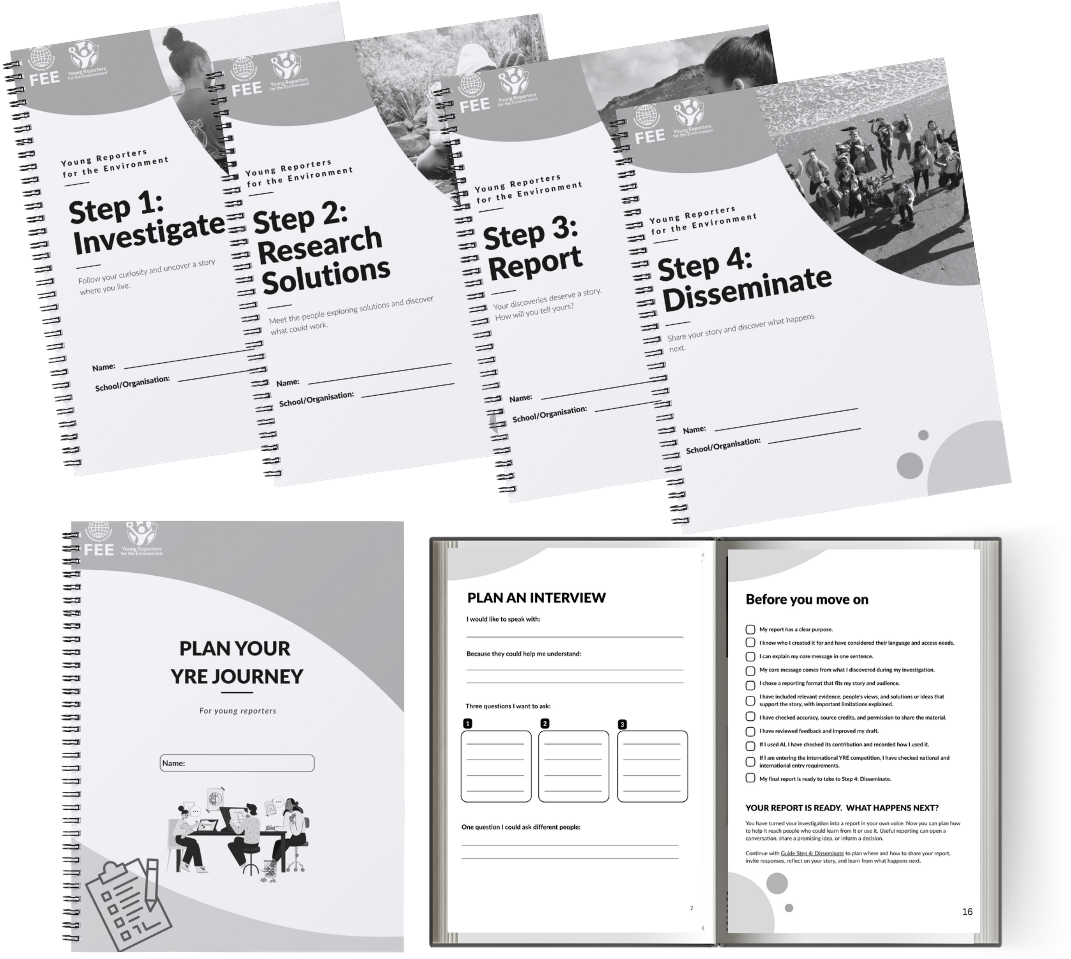
Use these four guides to investigate an environmental issue, explore solutions, create your report and share it with people who need to hear it. Start at the beginning or choose the step you need.
All materials are black and white, and printer-friendly, with plenty of space to write, scribble, brainstorm, take notes, and develop ideas as your reporting journey progresses.
Click on a guide below to download it and get started.
Step 1: Investigate: Follow your curiosity, ask questions and gather evidence about an environmental issue.
Step 2: Research Solutions: Listen to different perspectives and explore what is working and what could change.
Step 3: Report: Turn your discoveries into a clear story with a purpose and an audience.
Step 4: Disseminate: Help your story reach people, invite responses and reflect on what happens next.
Plan Your YRE Journey: A flexible timeline to help you organise your project.
EXPLORE A THEME
Discover story ideas, surprising connections and questions to investigate. Use these theme companions alongside the YRE Journey Guides.
2026–2027: Small Worlds, Big Futures: Reporting from a Pollinator-Powered 2030
A flower opening after sunset. A fallen leaf full of life. What could these small worlds reveal about our shared future?
Explore pollinators and the wider relationships connecting nature, people and places.
Small Worlds, Big Futures: Exploring Pollinators through YRE. A Guide for Young Reporters
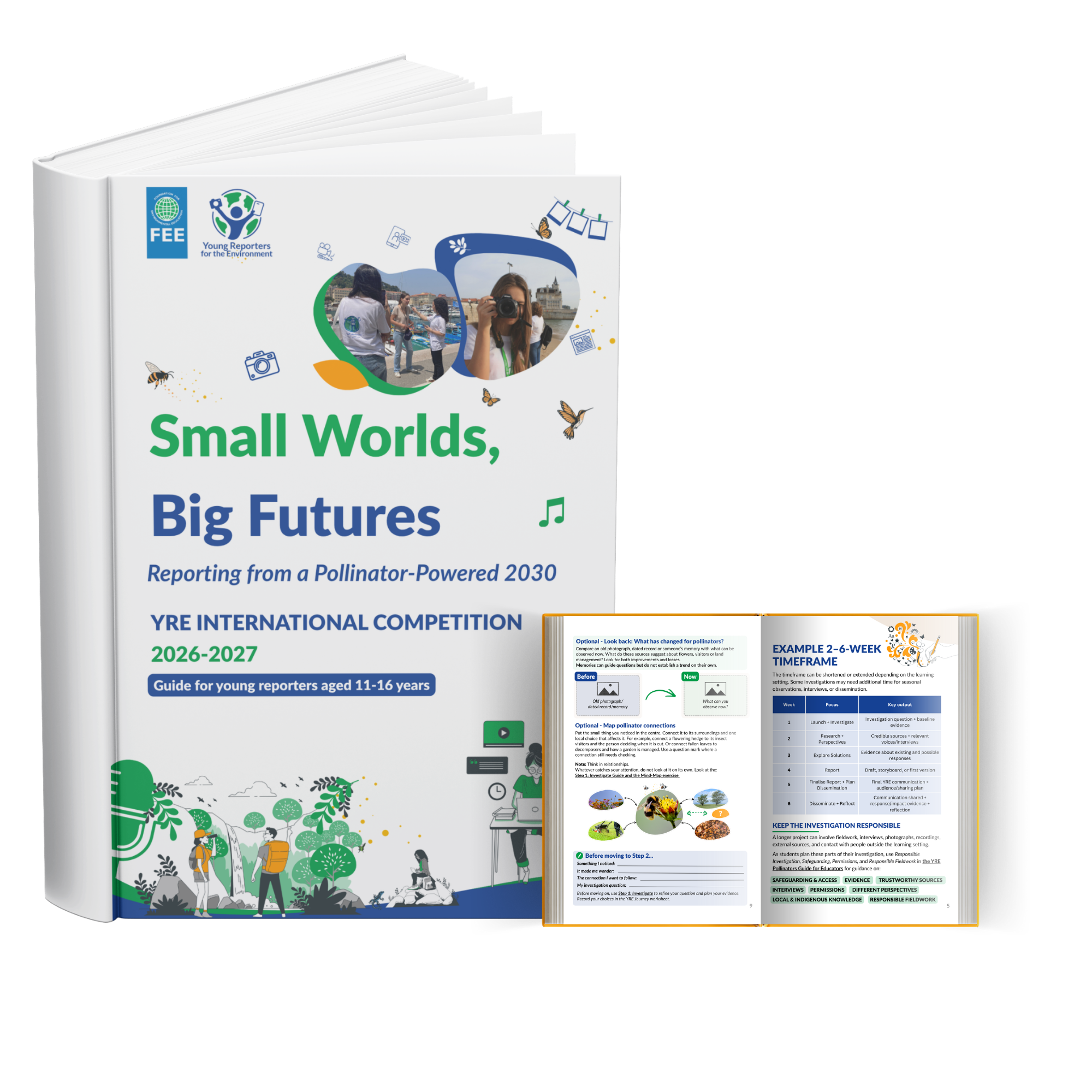
A practical guide for young reporters with activities, questions, investigation ideas, and prompts to help them look closely at pollinators and small nature, explore local stories, and develop their own YRE reporting.
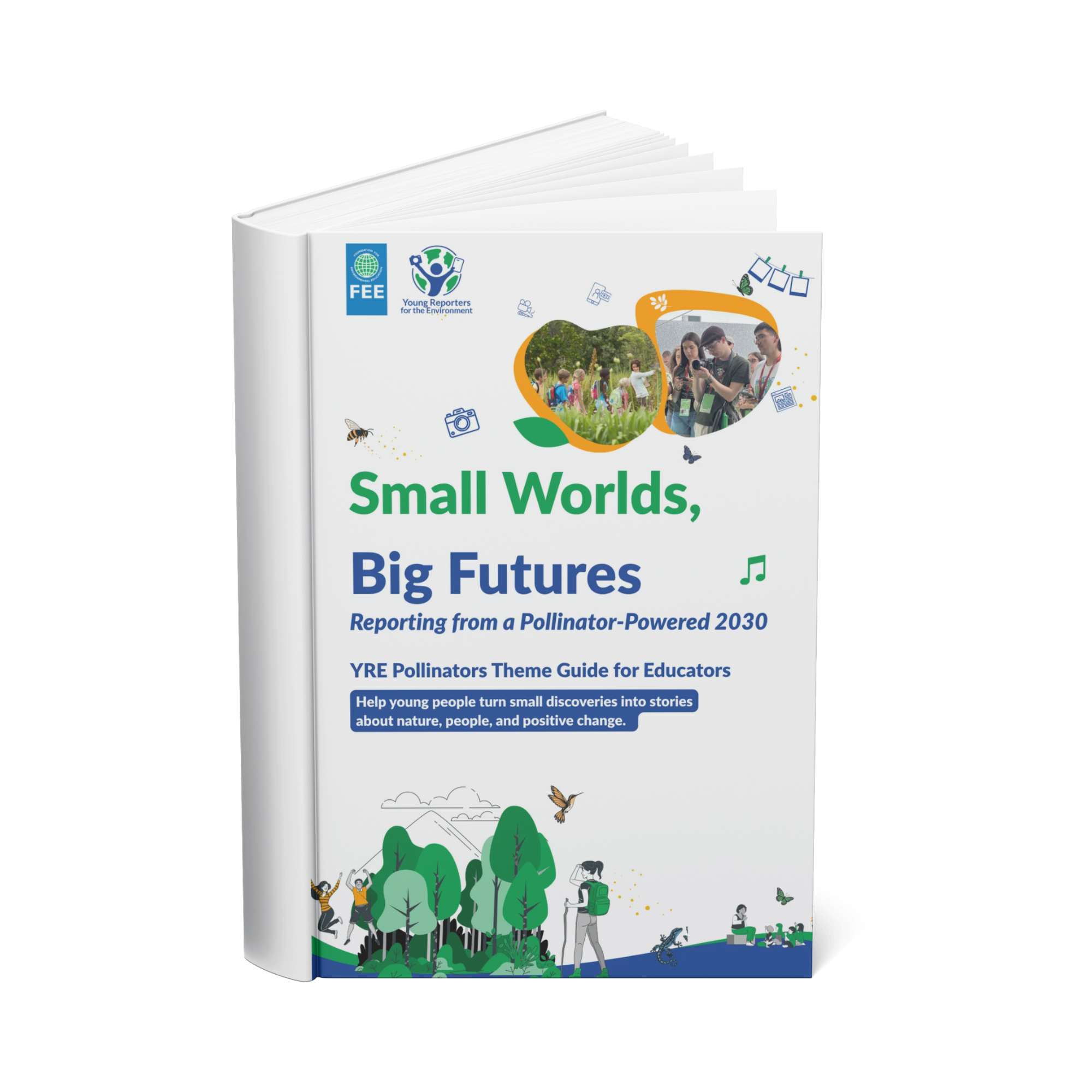
Small Worlds, Big Futures: Exploring Pollinators through YRE. A Guide for Educators
A practical guide introducing educators to the competition theme, key concepts, investigation opportunities, and ways to support young people in exploring pollinators through the YRE methodology.
Flexible Learning Pathways: Three Ways to Explore the Theme
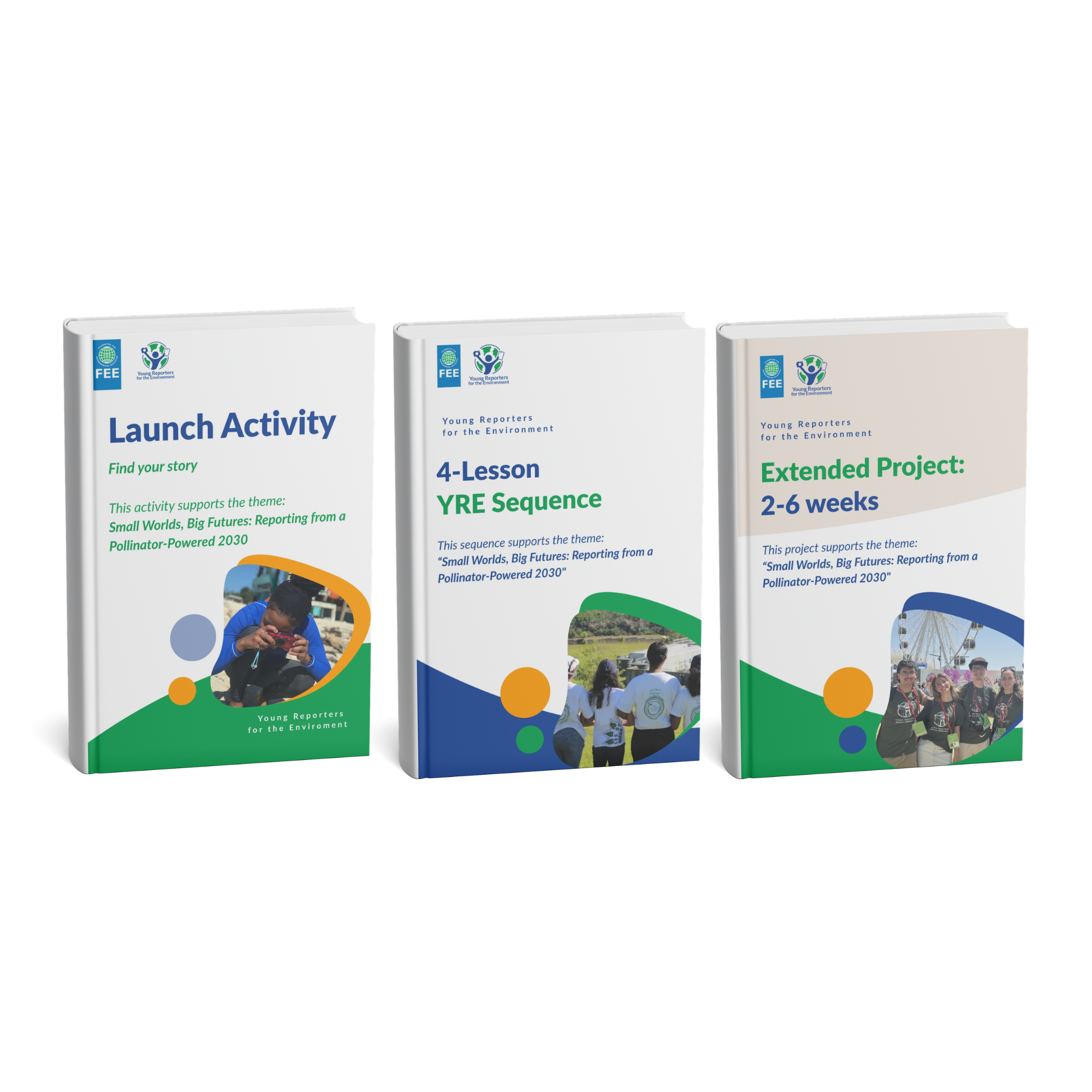
Educators can choose from three flexible approaches to explore pollinators and small nature with young people: Launch Activity, a ready-to-use introductory activity to spark curiosity and identify potential issues and stories to investigate; 4-Lesson Sequence, a structured approach guiding young people from exploring the theme to investigating an issue and developing their own YRE story; or Extended Project: 2–6 Weeks, offering more time to investigate local issues in depth, engage with different perspectives, explore solutions, and develop their final YRE work.
YOUNG REPORTERS IN EVENTS
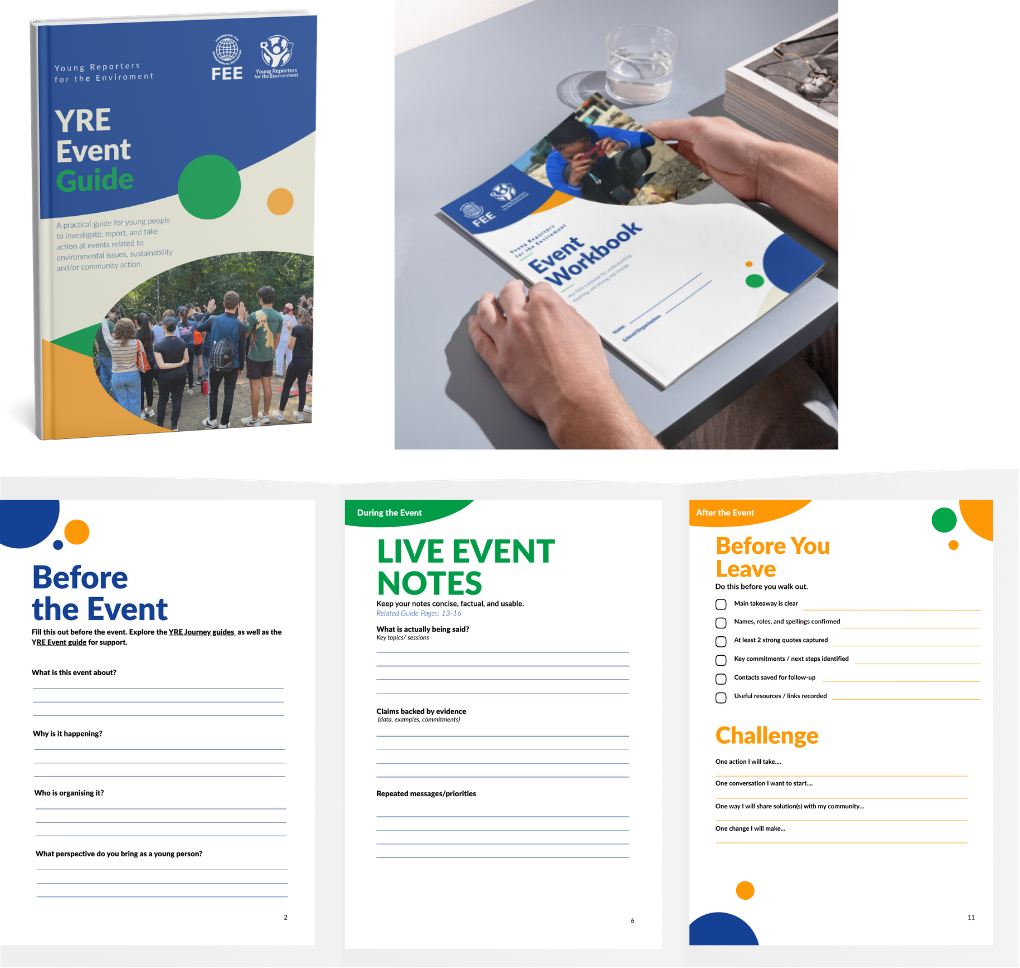
Turn events into opportunities to investigate, connect, and report with two complementary resources: The YRE Event Guide, offering practical guidance to help young reporters prepare questions, identify who to speak to, gather information, explore different perspectives, and communicate their findings; and the Ready-to-Print Event Workbook, which young reporters can use before, during, and after an event to prepare, take notes, capture key ideas and perspectives, reflect on their experiences, and plan their next steps towards meaningful environmental reporting.
RESTORE YRE ACTION GUIDES
Investigate with Young Reporters for the Environment (YRE)
Use the YRE Action Guide to investigate ecosystem restoration through real stories and ideas for your own local reporting. Explore different perspectives, uncover locally relevant angles and turn your findings into stories that can inspire awareness and action.
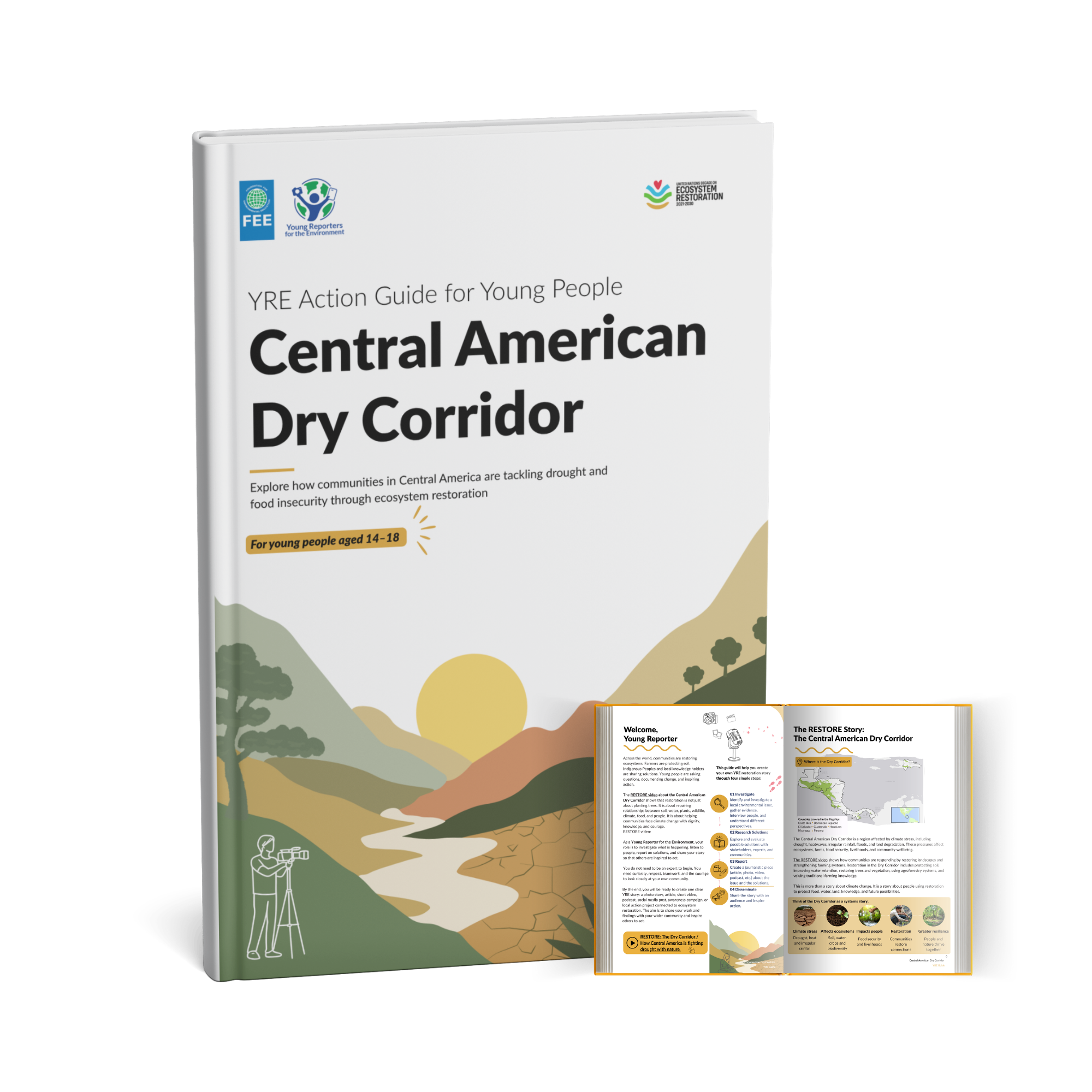
Central American Dry Corridor
What happens when drought, unpredictable rainfall, and degraded soils affect not only ecosystems but also food, water, livelihoods, and communities?
SMALL ISLAND DEVELOPING STATES
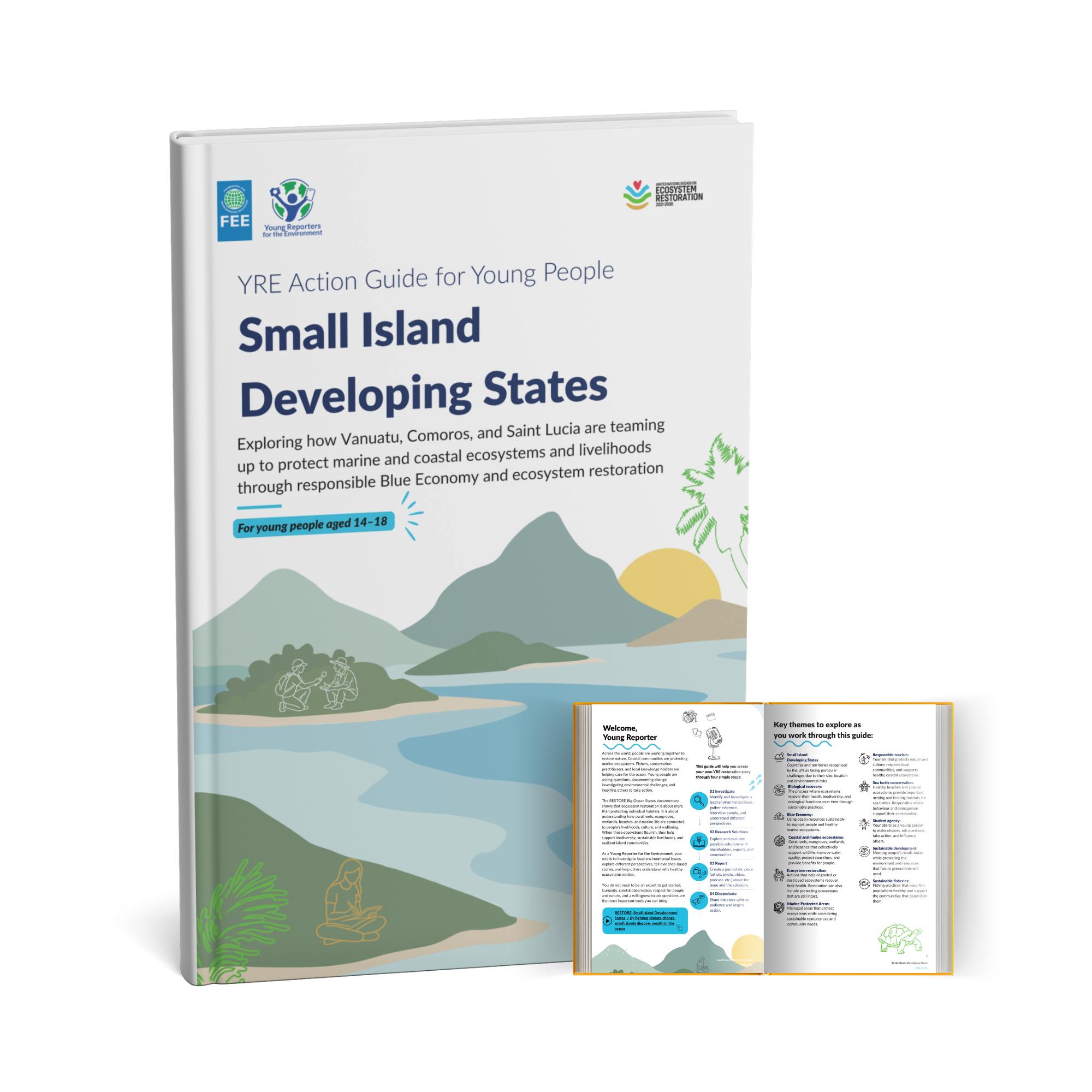
Coming Soon!
Previous competition themes
YRE Workbooks
2026 Competition Workbook
for Young Reporters (16+ years)
The YRE workbook is available in:
More languages coming soon!
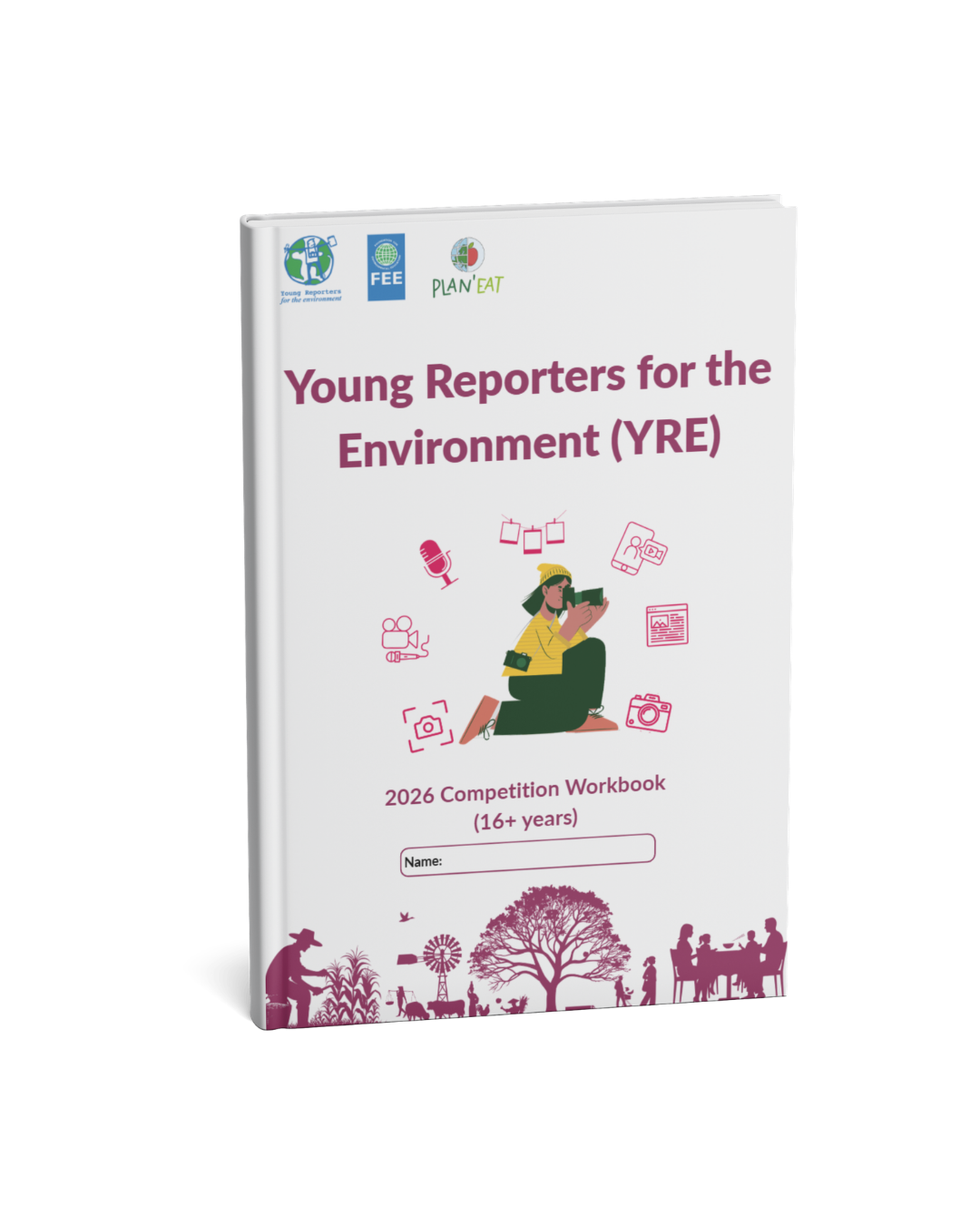
2026 Competition Workbook for Young Reporters (11-16 years)
The YRE workbook is available in:
More languages coming soon!
2026 YRE Teacher Guide on Food Literacy
The YRE Teacher Guide is available in:
More languages coming soon!
2026 YRE PLAN’EAT Teacher Presentation
YRE Teacher Presentation is available in:
More languages coming soon!

RESOURCES & GUIDELINES
AI guidelines
Have a look at these guidelines on how to work with Artificial Intelligence (AI).
Twinning guidelines
Want to learn more about twinning with another YRE school? Download this guide for information on how to do it!
10 Tips Series
Download our easy to use 10 tips and tricks series for creating a YRE entry: podcasts, photos, videos, articles. Here
FEE Academy Courses
Course name: ‘Leading with Purpose: Implementing the Young Reporters for the Environment Programme’
This course is designed to equip educators with:
Tools and strategies to integrate YRE into their teaching practice.
Methods to guide young people in exploring environmental challenges and identifying actionable solutions.
Opportunities to connect with a global network of educators dedicated to environmental learning.


How to avoid Disinformation
If you're looking for guidance for Young Reporters on avoiding #FakeNews, here's a concise 10-tip guide to create a visually engaging and practical resource.
ReportS
‘At a Glance’ - YRE International Competition 2025-2026
Alongside the educational resources below, this At a Glance Report was produced to provide a concise overview of the Young Reporters for the Environment (YRE) International Competition 2025-2026. The report presents key participation data, highlights, achievements and examples of action from around the world, offering a snapshot of the competition's reach and impact while showcasing how young people explored the links between climate change and food security through environmental journalism.