
YRE METHODOLOGY
THE Four STEPS FRAMEWORK
The YRE Four Steps methodology is grounded in Project-Based Learning (PBL), an approach where young people actively explore real-world environmental issues through inquiry and collaboration. Instead of passively receiving knowledge, students take the lead in identifying a problem, investigating its causes and impacts, and developing solutions.
Throughout the Four Steps, young people lead the process: deciding what matters to them, whose perspectives to explore, what they want to communicate, and how they can use their voice to contribute to change.
Through this process, participants:
Build critical thinking and problem-solving skills.
Learn to ask strong investigative questions and back their findings with credible evidence.
Practice teamwork, communication, and creativity.
Connect local issues with global challenges, linking directly to the Sustainable Development Goals (SDGs).
Develop the confidence and skills to communicate with purpose and engage others in environmental issues and solutions.
In YRE, PBL is not just a teaching method. It is the foundation of how students learn to become active reporters, storytellers, and changemakers. By engaging in authentic, hands-on investigations, they gain skills that prepare them not only for competitions but also for life beyond the classroom.
YRE engages participants aged 11-25 in environment-focused citizen journalism, encouraging them to investigate local environmental issues and solutions, and report on them through articles, photos, podcasts or videos and other forms of expression/communication.
The programme develops participants’ skills and knowledge about the environment, enhances communication and citizenship skills, individual initiative, teamwork, critical analysis, social responsibility, and leadership abilities.
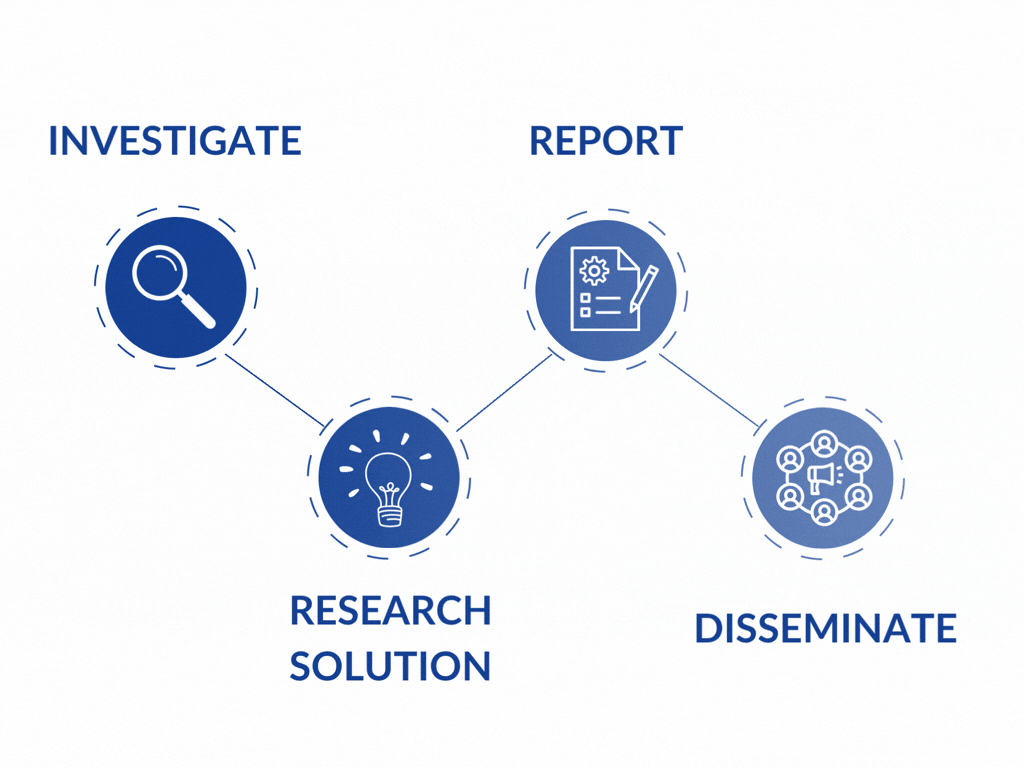
The Fours Steps take young people from curiosity and investigation to purposeful communication and engagement with their communities and different stakeholders
YRE uses a tried and tested Four Steps methodology:
Step 1 - Investigate
Start by conducting a thorough investigation of the environmental issue that concerns you. Use reliable and credible sources such as scientific papers, government reports, and interviews with local experts to understand the scale of the issue in your local community. Find the important people or groups who are linked to this issue, with different perspectives. Analysing their role, potential biases and critically evaluate information.
Be curious and critical. Ask questions, listen to different perspectives, and let the evidence shape your understanding of the issue.
Step 1 provides opportunities to practice your:
Critical thinking and information literacy: Evaluating information from various sources strengthens critical thinking skills. You will learn to distinguish credible sources, find biases, and analyse information objectively.
Research skills and initiative: This stage requires independent research, teaching you to find relevant information, use research tools effectively, and manage your research process and time.
Communication skills: Learning to find important people or groups and understanding their perspectives involves active listening and clear communication.
Problem-solving: Understanding the historical, economic, social, and political implications will help you to find the causes of your environmental issue.
Visionary thinking: Linking your local environmental issue to the bigger global picture will help to broaden your perspectives and understanding of synoptic links.
Initiative and self-directed learning: This stage will require you to proactively gather independent information on your environmental issue will help you to manage your learning and time more effectively.
Explore the Step 1: investigate guide for young reporters for practical guidance, questions, and activities to help you investigate an environmental issue.
Step 2 - RESEARCH AND PROPOSE SOLUTIONS
Building upon your investigation in Step 1 research potential solutions to the environmental issue. Contact environmental organisations, community leaders, and academics to try to find the most effective solutions to your environmental issue. Evaluate each solution critically, considering all potential implications.
Step 2 provides opportunities to practice your:
Collaboration and communication: speaking and actively listening with others to help find a solution will require you to have effective communication and good collaboration skills.
Critical thinking and problem-solving: Evaluating proposed solutions involves analysing their strengths and weaknesses.
Decision-making: Finding the most effective solution requires informed decision-making. You will learn to evaluate your research, consider different perspectives, and choose the right solution.
Strategic thinking: Developing balanced justifications for your chosen solution requires strategic thinking. You will learn to spot potential challenges, develop counter-suggestions, and present a convincing justification for your solution.
Innovation and creativity: While researching solutions, you should consider less obvious approaches or adaptation of existing solutions to help develop your creative thinking skills.
Confidence and advocacy: Being able to thoroughly explain and justify your chosen solution builds confidence in your research and ability so that you can persuasively promote your solution in the next stage of the YRE programme.
Step 2: Research and Propose Solutions can be approached in two ways: students can either identify and highlight solutions that are already being implemented in their own context, or investigate solutions being implemented elsewhere and explore how these could be relevant or adapted to their own context. In both cases, the proposed solutions should be supported by evidence, demonstrating their effectiveness, feasibility, or potential to address the issue being investigated. Students should also identify the key conditions and factors necessary for these solutions to succeed, as well as any potential risks, limitations, or challenges associated with their implementation. This includes examining previous attempts, pilot projects, and unsuccessful solutions, particularly in their own context, to understand why certain approaches worked or failed, what lessons can be learned, and which elements are critical for future success
Explore the Step 2: Research and Propose Solutions guide for young reporters for practical guidance on investigating solutions, engaging stakeholders and turning research into ideas for change.
step 3 - Reporting
Put your investigation and research findings into an exciting report. Communication is not simply about presenting what you found. It is about making intentional choices about what you want to communicate, who needs to hear it, and why. The format you choose is the vehicle for communicating the message of your investigation to the people you want to reach. Once you know what you want to communicate and why it matters, choose the format that best fits your message, your audience and what you want your communication to achieve.
Before choosing a format, consider:
What is my message? What do I want people to understand, feel or act on?
Who is my audience? Who needs to hear my message?
How can I best reach them? Where and how does this audience communicate and engage with information?
What form best fits my message? Would it be most effective through words, images, sound, video or another creative form?
What do I want to achieve? Do I want to inform, start a conversation, influence a decision, encourage action or share a solution?
Your audience, message, and purpose should guide your communication choices.
Start with your message and audience, then choose the format that will help you communicate with them most effectively. Learn more about the article format, photo format, video format, podcast format and open format.
This step provides opportunities to practice your:
Communication and audience awareness: Finding your target audience and making sure your report content and format is suitable for them develops communication skills and audience awareness. You will learn to adapt your report so that it is appealing to different audiences.
Storytelling and content creation: Creating an interesting report – whether it is an article, photograph, video, or podcast– requires strong storytelling and content creation skills.
Project management and planning: Planning how you will report the issue and solution involves project management skills. You will learn to develop a clear plan, manage your time effectively, and meet deadlines.
Advocacy and persuasion: Using experts and evidence to support your chosen solution strengthens your advocacy skills.
Leadership and influence: Using your own voice to communicate an issue you care about can help inform conversations, challenge assumptions and encourage others to engage.
Confidence and public speaking (if applicable): If you choose to present your report publicly, you will develop confidence and public speaking skills.
Collaboration: Creating a report with others, as part of the YRE International Collaboration will teach you how to work effectively in a team, delegate tasks, and support each other's strengths.
Explore the Step 3: Report guide for young reporters for practical guidance on identifying your message, and audience, and choosing how to communicate your investigation effectively.
step 4 - dissemination
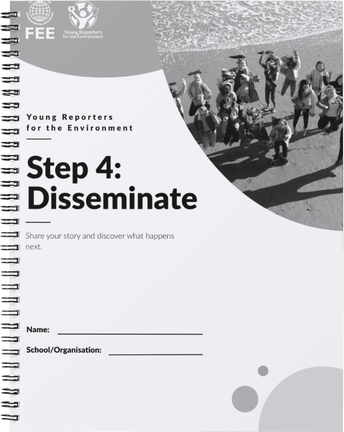
Your communication becomes meaningful when it reaches people. The last step is to share your report intentionally with the audiences you identified, and look for opportunities to bring your findings, and solutions into relevant conversations.
Find opportunities to present your report to important people or groups who can help with this. Creating a communication plan will also help you to choose which media platforms to use to raise awareness and generate community support for your proposed solution. Actively take part in discussions and engage with others who share your interest for environmental responsibility. Remember, your single voice with well-researched information and a clear solution can create a ripple effect of positive change in your community. Think about who can learn from your results, respond to them, amplify them or, help you turn your ideas into action.
Step 4 provides opportunities to practice your:
Public Engagement and communication: Presenting your report and engaging with the community on social media or participating in discussions requires strong public engagement and communication skills. You will learn to connect with diverse audiences, present your ideas clearly, and advocate for your solution effectively.
Community Building and collaboration: Spreading awareness and generating support involves building relationships with community members that share your environmental concerns.
Networking and influence: Discussions with those who can help conduct your chosen solution may involve negotiation and persuasion. It will be important to present compelling arguments (backed with evidence), address concerns, and find a solution that works for all.
Resilience and persistence: Building momentum for change requires resilience and persistence. You will have to overcome obstacles, criticism and may have to adapt your solution. Remember to stay motivated- leadership and inspiration take time.
Leadership and Mobilisation: By taking your findings beyond the classroom, and engaging others, you can use communication to encourage participation and contribute to environmental action.
Explore Step 4: Dissemination guide for young reporters for practical ideas on purposeful dissemination, reaching relevant audiences, and using your communication to engage others, and mobilise change.
Guides and resources
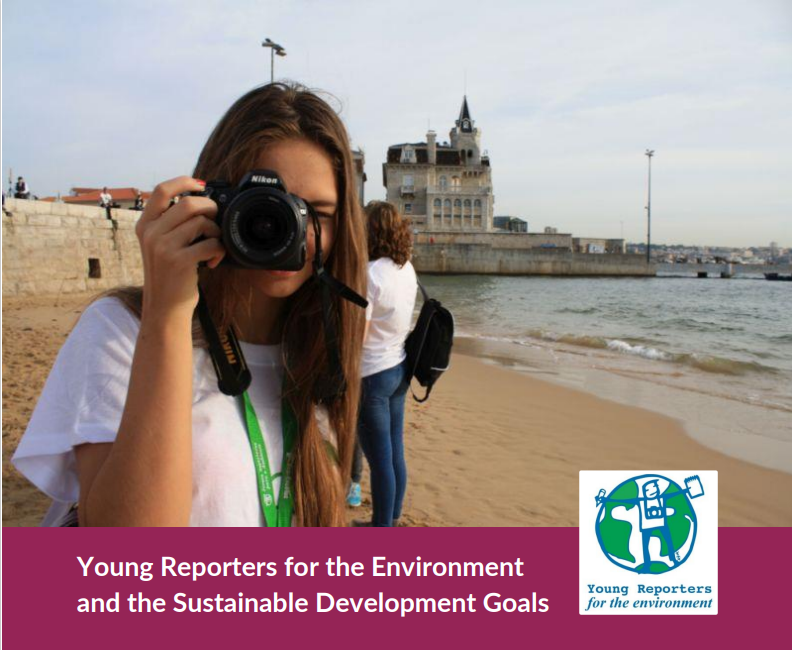
YRE and the Sustainable Development Goals
The YRE programme supports the 17 Sustainable Development Goals (SDGs)
in a multifaceted way.
Find out how through this comprehensive guide

Greening education and the YRE programme
Education for Sustainable Development (ESD) is key to tackling the urgent transformation we all need in our lives and societies.
In the context of the Greening Education Partnership, the YRE programme provides this guide as a learning approach to Greening Communities.