

Reflections from the IUCN Congress 2025
Reflections from IUCN Congress 2025
The IUCN Congress; leading hope and action through the Young Reporters for the Environment Programme

The IUCN World Conservation Congress, hosted between 9th and 15th October 2025, included FEE’s Global Directors of Education, Lee Wray Davies and Pramod Kumar Sharma powering transformative conservation through five sessions. These were centred around the UNESCO led Greening Education Partnership, Nature-Based Education and Young Reporters for the Environment. FEE’s directors were joined by other visionary environmental leaders from across the world, including Young Reporters themselves, who reinforced the central notion that youth leadership is critical to scaling and sustaining environmental action.
The presence of Young Reporters for the Environment at the IUCN Congress demonstrated that hope is not only a growing force but also a living presence which inspires changemakers worldwide to address important environmental challenges articulated in FEE’s GAIA:2030 strategy- taking action on biodiversity loss, pollution and climate change. The Young Reporters for the Environment programme provides the skills and project-based learning opportunities to achieve this, uniting communities across the globe in a collective effort to look after one another and the planet.
The notable role that Small Island Developing states (SIDS) play within protecting biodiversity, creating impactful conservation efforts and shaping climate resilience was a key focus both within the IUCN’s opening ceremony and throughout the seven-day congress. Following the interactive YRE sessions that took place at the congress and inspired by a Young Reporter, a fellow IUCN member stated that ‘We promise to continue working with young people around the world to make a positive difference to the planet. Hearing voices like yours will inspire a whole generation of future conservationists, to keep the whole planet and particularly islands safe, well and clean for wildlife.’ Sean Dick, Senior Conservation Education Manager, Conservation Education & Engagement at Chester Zoo.
Another key reflection from the congress was that the seeds of hope can be planted at any age, but as evident through both YRE sessions, 30 Years of youth led transformative conservation and youth-led storytelling for conservation, young people often prove to be some of the most receptive and powerful advocates for a greener, fairer world. FEE’s 220,000 wide global network of Young Reporters continue to lead the way in conservation in both land and marine systems across the globe; uniting hope with action.
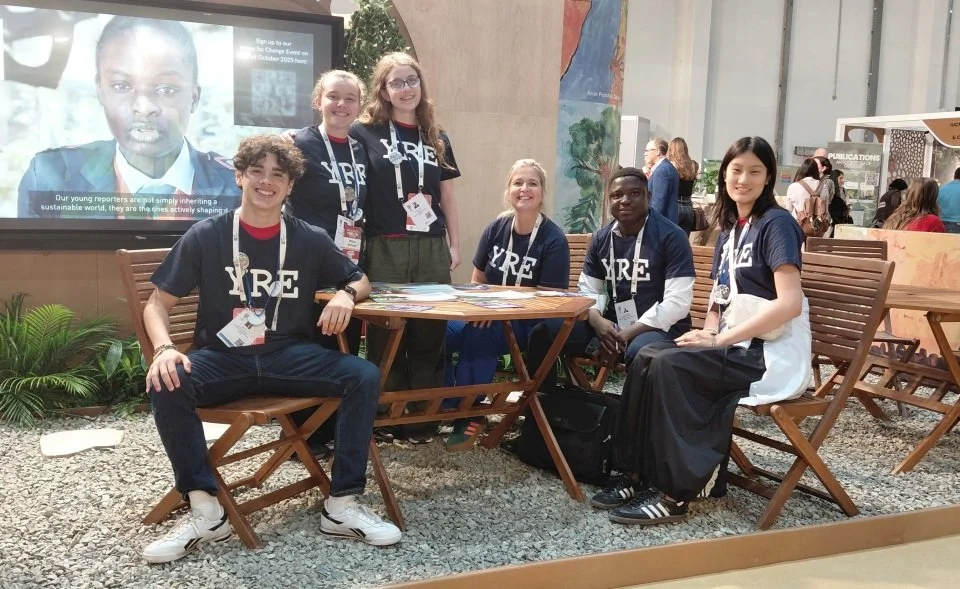
With time to reflect on the IUCN Congress, hope is no longer an abstract feeling, as it becomes tangible through the actions of young people leading the way through Young Reporters for the Environment. We see hope when Young Reporters organise clean-up campaigns such as Litter Less, advocate for transformational educational approaches through UN at your doorstep and facilitate intergenerational participation in their communities through Global Action Days. We hear hope through the voices and stories from Young Reporters who confidently present their projects and disseminate their work across the network during the annual YRE Competition. Their work, such as campaign videos from the Bahamas raising awareness about hurricanes on small islands, and articles from Bermuda enhancing young people’s participation in biodiversity restoration on these archipelagos, transform hope into impact, reminding us that real change is achievable and happening right now.
This connection between hope and action is the focus of Joanna Macy’s seminal work, Active Hope. As Macy reflects, 'Active Hope is a practice. Like tai chi or gardening, it is something we do rather than have. It is a process we can apply to any situation.' Hope is sustained through ongoing, conscious and evolving actions. These actions are at the heart of the Young Reporters for the Environment programme. The programme continues to demonstrate that investigating, researching, reporting and disseminating are four vital steps to celebrate the impactful work of Young Reporters. These were embedded in the themes of the congress, including scaling up resilient conservation action, reducing climate overshoot risks, delivering on equity, transitioning to nature-positive economies and societies, and disruptive innovation and leadership.
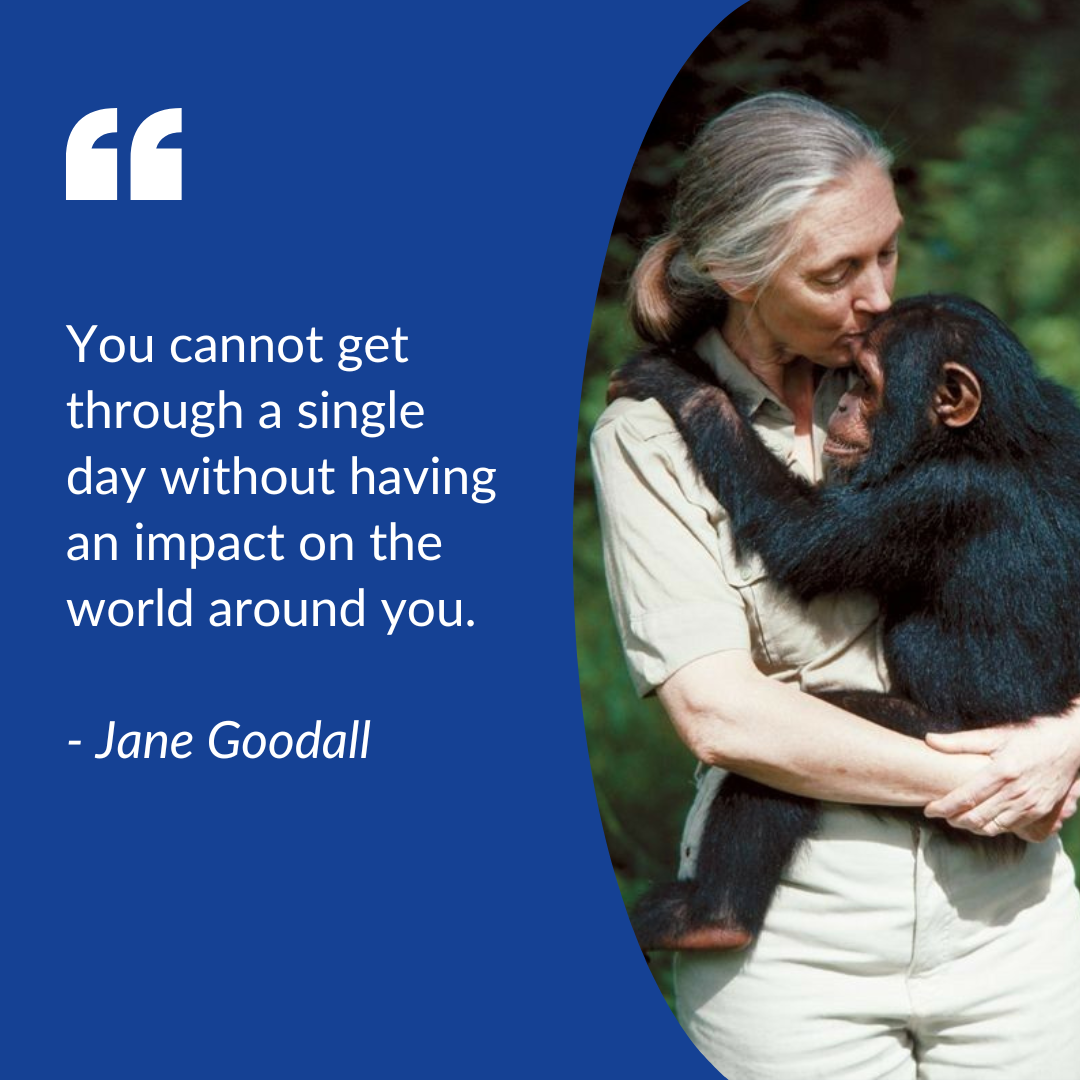
The late Jane Goodall, a cherished member of the IUCN Species Survival Commission (SSC) for many years also described hope as a cyclical process: 'You need hope to get you going, but then by taking action, you generate more hope. It's a circular thing.' In her work, The Book of Hope, Goodall identifies four reasons to hope: the human intellect, the resilience of nature, the power of young people, and the indomitable human spirit. Reflecting on her lifetime of conservation work and deep reverence for nature, the IUCN shared that Jane was someone who could ‘inspire a global movement for nature – reminding us what is possible when dedication, courage, and science unite in service of nature.’ You can read more here.
This same ethos has been championed by Young Reporters for the Environment for over three decades. In a fast-paced world where information is at our fingertips, YRE provides young people with the tools and foundation to lead meaningful investigations and develop projects that drive nature-positive solutions while strengthening community cohesion. It offers an essential opportunity for Young Reporters to express their creativity, compassion and critical thinking through different media and spark an ongoing curiosity about the natural world. As Robin Wall Robin Wall Kimmerer shared in her work, Braiding Sweetgrass, ‘Action on behalf of life transforms because the relationship between self and the world is reciprocal.’
It has often been noted that Young Reporters are the guiding force that both unite and renew motivation for all generations to take action on climate change. The words, photographs, videos, podcasts and media created by Young Reporters share profound insights into how we all play an important part in greening communities, now and in the future. Like many other habits, hope is something we can practice and integrate into our everyday lives. We are inspired by Young Reporters and their enthusiasm to share their stories, and we look forward to continuing to work with Young Reporters for the Environment across the world whilst leading a programme defined by excellence, optimism, resilience and of course, hope.
FREE Online Course for educators: Leading with Purpose: Implementing the Young Reporters for the Environment Programme

Leading with Purpose: Implementing the Young Reporters for the Environment Programme
This course is designed to equip educators with:
Tools and strategies to integrate YRE into their teaching practice.
Methods to guide young people in exploring environmental challenges and identifying actionable solutions.
Opportunities to connect with a global network of educators dedicated to environmental learning.
Read the following reflections by FEE’s Director of Education, Lee Wray-Davies, about the impact and influence of the Young Reporters for the Environment programme
“We all became educators, whether in a classroom, a Scout Group, or a Youth Centre because we believe in the power of young minds and want to help young people grow into confident adults who will succeed in life. The Young Reporters for the Environment (YRE) programme will help you to achieve this goal. Through YRE, you can guide young people in your care to learn critical skills, find their voice, and become the environmental leaders our world needs.
“By guiding them through the four steps of the YRE programme and involving them in YRE activities such as Global Action Days and YRE twinning, you are opening a new door for them that leads to a brighter, greener future beyond their time with you.
Professional development
Introducing YRE into your teaching practice is a great way to update basic skills such as research and use new technologies or platforms that may not be able to easily integrate into your day-to-day delivery of subject content. YRE gives you the chance (and excuse) to explore topics like project-based learning and dissemination techniques, which can refresh your existing lesson plans with minimal effort and time. For example, taking your students out to investigate a local pollution issue can be part of your science or geography curriculum, but also embeds literacy, persuasive writing, creativity and leadership (all rolled into one fieldtrip).
Growing your professional network
The YRE programme connects you to a global community of educators, environmental experts, and professionals who all care as much as you about education and sustainability. Through national and international YRE workshops, webinars, and twinning projects, you can collaborate with teachers worldwide. Sharing lesson plans, exchanging innovative ideas, and even co-creating YRE entries for the international competition. Speaking with educators from around the world not only expands your professional network but can bring new perspectives to your teaching, and enriches your content delivery with diverse, globally inspired cases studies.
Personal development
On a personal level, YRE can be incredibly fulfilling. There is definately something special about helping your students become caring, environmental advocates (why many of us became teachers in the first place!) No matter what your level of ‘environmental expertise’ YRE allows you to align your teaching with your personal values.
YRE is also a chance for you to grow your own knowledge. As you support your students through the YRE steps you will find out more about local environmental topics that may affect you, your family, friends and colleagues. Whether it is learning about produce on a local farmers markets or global climate policies, YRE is a great way to help you feel connected to what’s happening beyond your classroom walls. After all we are always learning!
Student attainment
The impact on your students’ attainment is where YRE really shines. As a tried and tested programme that has been running for 30 years we know that YRE students will develop a huge set of additional skills as they work through the 4-steps: critical thinking, communication, and problem-solving to name a few. When students tackle a YRE project, like reporting on litter in your community, they are not just learning facts, they are applying skills that boost their academic performance across multiple subjects.
For students who do not fit the 'academic' mold, YRE is perfect as it gives them a framework to use their unique strengths, whether they are creative, practical, or vocal the programme can help to introduce them to environmental action. Many may be happy to not work from a textbook or be assessed against formal standard but through YRE are learning how to utilise transferable skills to make the planet a little better. That’s the hidden trick of YRE, it can take students with no interest in ‘eco-matters’ and help them to become confident young people making a difference, often without them even noticing!
Curriculum enhancement
YRE fits seamlessly into ANY scheme of work and helps you meet curriculum standards with purpose. Of course it is a natural match for science, geography, and humanity subject, but you can also embed it into literacy (writing articles), art (creating campaign visuals), or even maths (analysing YRE data). A YRE project on renewable energy, for example could cover multiple subjects, making your teaching more cohesive and engaging, and means you have other teaching colleagues and departments collaborating on one project.
YRE also ties into sustainability goals that are being added into curricula around the globe. By embedding YRE, you are not just ticking a lesson plan box you are making learning meaningful and relatable. Students see how their education connects to the bigger picture, keeping them invested in learning.
Time-saving through student-led learning
YRE is designed to put young people in charge, meaning they manage much of the work, researching, writing, and creating content like articles, videos, or podcasts. YRE is a student-led programme so reduces the time you will need to spend on detailed planning and preparation. Instead, you can shift your focus to mentoring and helping, guiding your students as they take ownership of their YRE projects. It is an efficient way to deliver impactful learning experiences while not adding to your workload (and gives your students the chance to shine).
Embracing new technology and AI
The YRE International Competition encourages the use of tools like AI and digital media, aligning with its criteria to reward digital innovation in the appropriate format. Whether your students use AI to analyse their environmental data or produce short form videos, this will help you to also stay ahead of rapidly changing educational technologies. Integrating these tools into your teaching will not only keep your skills current but also equips your students with positive digital competencies essential in their future careers.
Use YRE as an opportunity to embrace tech trends and do not be afraid to allow your YRE student to teach you about the newest apps or podcasting terminology.
Community engagement
A big part of YRE is implementing your students environmental solutions, or at the very least spreading awareness of them, therefore making it a great whole school community project. YRE work will often involve speaking with local organisations, charities, and local leaders, so gives your students real-world communication experiences. YRE will give your students a platform to have a voice, present their findings to local stakeholders and take pride in what they have achieved.
As a teacher YRE is also a great opportunity to initiate partnerships and raise your school’s profile in the local community. These collaborations can bring in resources like guest speakers or field trips, and again when your YRE efforts get noticed, through local media or environmental awards. Senior leadership will find this irresistible!
Winning or even taking part in the YRE International Competition can lead to awards, media coverage, and widespread recognition for your students. As their guide, you and your school will share in this recognition. This visibility enhances your school’s reputation, boosts your professional profile, and can open doors to many new opportunities.
YRE is a recognised practice for ‘Greening Communities’ in the UNESCO Greening Education
Educator well-being
Finally, but most importantly YRE can lift your personal well-being as an educator. Teaching can be hard, but working on something meaningful, like shaping environmental leaders can reignite that sense of purpose for why you wanted to become a teacher in the first place. Seeing your students get excited about their YRE projects will definately remind you why you do this job and is a great antidote to teacher burnout.
Remember when your teaching feels relevant and tied to your values, it is much easier to stay motivated. YRE will bring a fresh energy to your classroom delivery, making your days more enjoyable(ish) and your career more sustainable.
Lee Wray-Davies
FEE Director for Education, with over 25 years teaching experience
Brewing Collaboration: Young Reporters for the Environment Join Forces Through YRE Twinning
—— Article written by YRE International Collaboration from Türkiye, Portugal, and the Netherlands (Twinning Group) ——
At YRE Head Office, we are always inspired by the creativity and dedication of young reporters worldwide. This year, through the YRE International Collaboration 2024/ 2025 (Twinning) , we are thrilled to highlight an exciting initiative uniting Young Reporters for the Environment (YRE) teams from Portugal, Türkiye, and the Netherlands.
This collaboration is made possible through Twinning, a YRE Programme initiative that connects schools and young people across borders to exchange ideas, share knowledge, and work together on pressing environmental issues. By fostering these international connections, Twinning strengthens global cooperation and empowers young people to take action beyond their local communities.

One unexpected but fitting topic emerged from this partnership—coffee. From its deep cultural roots to its modern-day environmental impact, coffee consumption provided the perfect lens for these students to explore sustainability challenges in their cities. By working together, they are not only researching solutions but also inspiring meaningful change in their communities and beyond.
To learn more about this collaboration, YRE International spoke with the Twinning teams in a Q&A, where they shared insights into their project, their experiences working across borders, and how they hope to inspire others to take action. Read on to discover how this initiative is brewing a greener future!
From the rich heritage of Constantinople's coffee houses to today’s bustling cafés, coffee has always connected cultures. Now, Young Reporters for the Environment from Portugal, Türkiye, and the Netherlands are uniting through this shared tradition to tackle global environmental challenges!
YRE International: How did the collaboration take place? Who contacted whom?
Twinning Group: We are YRE teams from Portugal, Türkiye, and the Netherlands as part of the YRE International Collaboration 2025. Each of us has a strong commitment to YRE, and this year, the FEE Education Programmes: Twinning brought us together. The Turkish YRE team reached out to our friends in Portugal and the Netherlands, and this is how our collaboration continued.
YRE International: How did you settle on the topic of coffee and youth?

Twinning Group: During our initial virtual meetings, students from Türkiye, Portugal, and the Netherlands identified coffee consumption and ecosystem conservation as key topics. Surprisingly, we found many cultural and traditional similarities in the places we live, one of which was traditional coffee-drinking habits. Interestingly, the world’s first coffee house, Kiva Han, opened in 1555 in Constantinople, now known as Istanbul. However, these traditions have also led to environmental challenges that need to be addressed at both local and global levels.
Driven by a shared passion for environmental change, students from Ari Private Middle School (Türkiye), EB Terras do Ave (Portugal), and Omnis College (the Netherlands) have united to address ecosystem conservation challenges in cities. They focused on three pressing issues: the rising coffee consumption among youth, the plastic waste generated by branded coffee shops, and strategies to minimise coffee's carbon footprint.
YRE International: What kind of meet-ups do you have scheduled, and what is it like working with people from other countries?
Twinning Group: We have established an action plan for our project. Students from Türkiye, Portugal, and the Netherlands host virtual meetings, during which they regularly report on the results of their local findings. Our students have engaged many project partners locally and globally, reaching out to school communities and families in Portugal, Türkiye, and the Netherlands, making this collaboration even more meaningful.
What we especially love about this international collaboration is that we meet so many like-minded people—young and old—who are passionate about making a positive impact on their countries and the planet!
Local and international YRE communities have been involved and kept informed via a WhatsApp group, schools’ social media accounts, and international platforms. Every step of our collaboration has been shared in the ‘GOLD’ International Online Kids Magazine by Ari Private Middle School.
We will continue this international collaboration by reaching out to local coffee shop markets, environmental organisations, and local and international media! By addressing these issues, we hope to inspire young people and communities worldwide to adopt sustainable habits and protect the environment.


—————————————————————————————————————————————————
If you enjoyed this story, make sure to visit our Twinning Webpage to learn more about YRE International Collaboration.
Are you looking for a Twinning partner for your own international collaboration? Join our Facebook group to connect with like-minded teams from around the world.
And if you have a collaboration you'd love to share, feel free to contact us at education@fee.global—we’d love to hear about it!